
Last year, the Second Circuit declared that the “door” was “effectively shut” on claims under the Video Privacy Protection Act (“VPPA”) involving internet tracking tools like pixels. However, a recent decision from the Southern District of New York, Sutton v. TED Foundation, shows that the door remains ajar where data is disclosed in a plain, legible format.
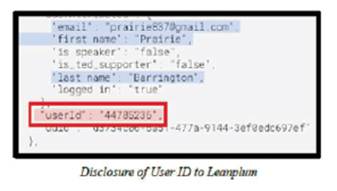
Defendant TED is a non-profit that produces TED Talks. It operates a website and app where users can create free account to receive personalized video recommendations. The plaintiff alleges that TED uses third-party analytics tools from Leanplum, Mixpanel, and OpenWeb to collect personal information, such as names, email addresses, videos viewed, and user IDs.
The district court denied TED’s motion to dismiss notwithstanding that the Second Circuit had “largely slammed [the door] shut” on new VPPA claims in Solomon. Sutton v. TED Foundation, Inc., No. 23 CIV. 9219 (DEH), 2026 WL 207000, at *5 (S.D.N.Y. Jan. 27, 2026).
Solomon requires plaintiffs to plead that the disclosed data was in a form that an “ordinary recipient” could “with little or no extra effort” identify the plaintiff’s video-watching habits. Trackers like the Meta Pixel often send data in coded form that is unreadable by the lay person—making this a difficult pleading bar for most plaintiffs.
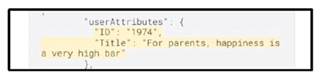
Not so in Sutton. The plaintiff alleged that TED disclosed data identifying watched videos in plain language anyone could read, not as a jumble of letters and numbers:
This case underscores the importance of the upcoming Supreme Court case, Salazar v. Paramount Global, where the Court recently granted cert. In Salazar, the Supreme Court will address—through the statutory question of who is a “consumer”—the scope of the VPPA and exposure for companies with video content embedded in their products.
In the immediate term, companies concerned about VPPA exposure should verify whether their analytics tools—especially Leanplum, Mixpanel, or OpenWeb—transmit personal information in a form that an ordinary person could understand, or only in an unreadable format requiring special knowledge or technical expertise.



/Passle/5cb04e9a989b6e13ecfcf95d/MediaLibrary/Images/2026-01-25-21-07-45-516-69768621511eaff31e8fbcf1.png)
/Passle/5cb04e9a989b6e13ecfcf95d/SearchServiceImages/2026-01-24-15-45-55-342-6974e9338a71e5f81a34b101.jpg)


