
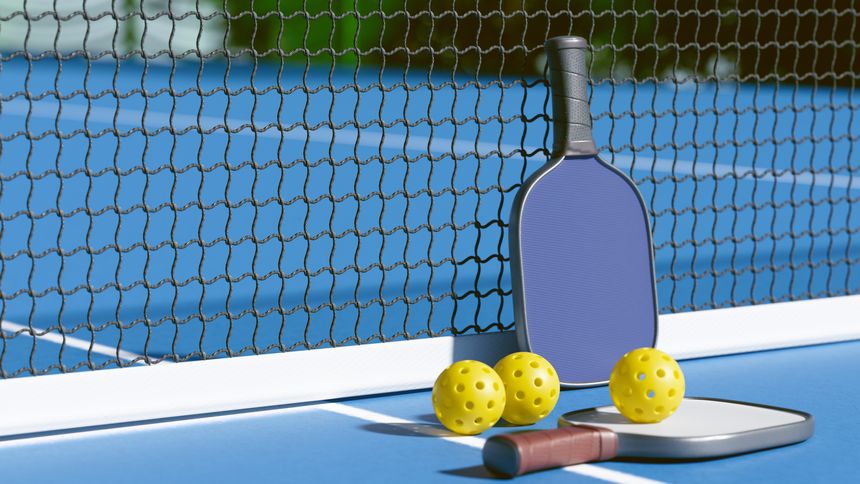
I am getting to the point in my life (or at least my legal career) where it is time to turn my attention to pickleball. It was inevitable that this fast‑growing sport would generate litigation. So far, most cases have involved personal injury or noise‑related nuisance claims, but two recent decisions caught my eye because they raise First Amendment and IP issues. One is a Texas state appellate decision addressing defamation and the Texas’s anti-SLAPP statute; the other is a federal Lanham Act case out of Maryland.
1. The Texas Defamation/Anti‑SLAPP Case
In a dispute within the Coles Crossing homeowners’ association, a committee was formed to discuss modifying existing tennis courts for pickleball use. At a committee meeting that became quite heated, the defendant accused the plaintiff committee head of taking inappropriate photos of children on the courts. She made these accusations despite repeated explanations from multiple board members that the photos were taken to document rule violations by a tennis pro, who apparently was violating the homeowners’ association rules by using multiple courts simultaneously. Months later, the defendant repeated the accusations, suggesting the plaintiff was a “pervert, pedophile, or sexual predator.”
The plaintiff sued for defamation and intentional infliction of emotional distress. The defendant moved to dismiss under the Texas Citizens Participation Act (TCPA), Texas’s anti‑SLAPP statute. Such statutes are designed to protect citizens from having their right to free speech silenced by litigation. The trial court denied defendant’s motion.
On appeal, the Fourteenth Court of Appeals of Texas affirmed the denial of the TCPA motion as to defamation. The court held that the statements arose from a matter of public concern and that the plaintiff had met his prima facie burden on defamatory meaning and actual malice. Notably, the court emphasized that the defendant continued making the accusations even after learning the legitimate reason for the photographs.
However, the appellate court reversed as to intentional infliction of emotional distress, concluding that the claim relied on the same statements as the defamation claim and could not independently satisfy the TCPA standard. Under the decision by the appellate court, which can be found here, plaintiff's defamation claim proceeds; the intentional infliction claim does not.
2. The Maryland Lanham Act Case
In the federal case, the USA Pickleball Association (USPA) sets national standards and certifies pickleball equipment. Joola, a paddle manufacturer, says it developed an innovative new paddle design, obtained USPA approval, and manufactured over 100,000 next‑generation paddles in reliance on that approval. Joola claims USPA later revoked certification and asserted the paddles violated design rules. Joola sued, alleging breach of implied contract, tortious interference, promissory estoppel, negligent misrepresentation, and fraud.
USPA counterclaimed, arguing that Joola abused the approval system by marketing paddles as “USPA‑approved” even though the paddles sold differed from those submitted for testing. According to USPA, the paddles created a “trampoline effect” that increased ball speed, creating an unfair advantage. The counterclaims included false endorsement under the Lanham Act and fraud.
Joola moved to dismiss the counterclaims, and the court denied the motion. Citing Section 43(a)(1)(A) of the Lanham Act, the court held that falsely associating USPA’s seal of approval with non‑approved paddles plausibly stated a claim. The court also found that USPA met the Lexmark standing requirements because mislabeling could diminish the value of its approval seal and cause reputational harm. The district court's February 2026 decision in Sport Squad. Inc. v. USA Pickleball Association can be seen here.
I look forward to seeing how these cases proceed. At the very least, perhaps down the road one could provide the basis for a sequel to Marty Supreme.
/Passle/5cb04e9a989b6e13ecfcf95d/SearchServiceImages/2026-08-13-04-04-12-271-6a7d423c312bb128ee75f9f3.jpg)
/Passle/5cb04e9a989b6e13ecfcf95d/SearchServiceImages/2026-07-29-14-59-38-687-6a6a155a7b233ab23d628568.jpg)
/Passle/5cb04e9a989b6e13ecfcf95d/SearchServiceImages/2026-06-23-15-33-03-756-6a3aa72f117422070cd62a94.jpg)
/Passle/5cb04e9a989b6e13ecfcf95d/SearchServiceImages/2026-05-29-17-48-37-335-6a19d17534616b2ba0fc1773.jpg)


