On October 19, 2026, the Supreme Court upheld the Fifth Circuit’s judgment in Vetter v. Resnik, which held that statutory termination of a copyright grant returns rights to the author or heirs throughout the world, not just in the United States. As I anticipated in my January post, the case reached the Supreme Court. But the Court’s recent order resulted from a procedural quirk and is not a ruling on the merits.
What the Supreme Court Did
The petitioners (BMG Rights Management, Capitol CMG, Essential Music Publishing) acquired the interest of the losing defendants, Robert Resnik and Resnik Music Group, after the Fifth Circuit ruled, and filed a petition for certiorari on June 11, 2026. The petition drew a number of amicus briefs, including from Paramount Pictures, the Motion Picture Association, the Recording Industry Association of America, the International Federation of the Phonographic Industry, and a group of intellectual property law professors. All of these briefs supported the petition for certiorari, urging the Supreme Court to hear the case and reverse the Fifth Circuit’s decision.
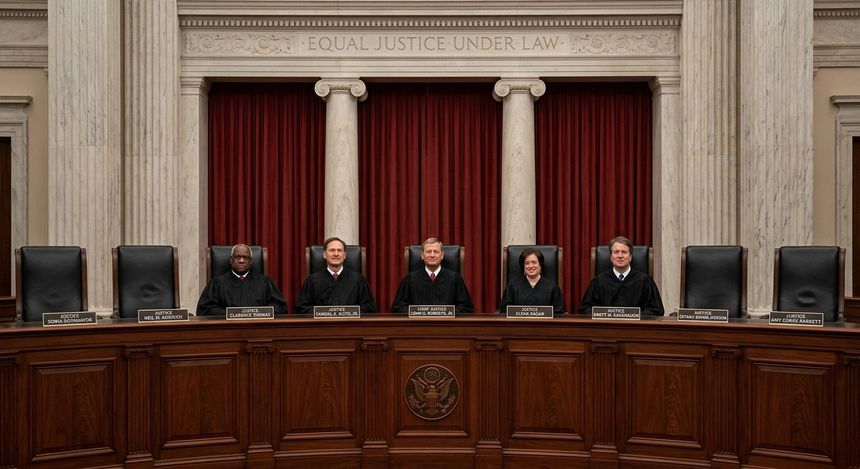
Justices Sotomayor, Gorsuch, Barrett and Jackson took no part in considering the petition, and the Supreme Court’s order does not explain why. The order states that the Court “lacks a quorum” under 28 U.S.C. § 1 and that the qualified Justices concluded the case cannot be heard and determined at the next Term. Under 28 U.S.C. § 2109, the Court therefore affirmed the Fifth Circuit’s judgment “with the same effect as upon affirmance by an equally divided court.”
In other words, this was not a denial of certiorari and not an endorsement of the Fifth Circuit’s reasoning. The Fifth Circuit’s judgment simply stands.
The Fifth Circuit Decision in Brief
The case involves the 1963 assignment of “Double Shot (Of My Baby’s Love)” to a music publisher. In 2019, co-writer Cyril Vetter terminated his grant under 17 U.S.C. § 304(c), and he and his company, which had purchased the renewal rights held by co-writer Donald Smith’s heirs, sought a declaration that they own the copyright worldwide. The district court agreed, and on January 12, 2026, the Fifth Circuit affirmed. The key points:
- Section 304(c)(6)(E) provides that termination affects rights that “arise under this title.” The court read that phrase as referring to the source of the rights (U.S. copyright law) and found no geographic limitation in the statute.
- The court ruled that the language in the statutory provisions that termination in no way affects rights under foreign laws does not mean that the recipient of a grant made to a US entity may continue to exploit the work outside of the US.
- The court held that the renewal interest purchased from Smith’s heirs likewise carries no geographic limit.
- It rejected the argument that the result conflicts with U.S. treaty obligations, including the Berne Convention.
For a fuller discussion of the statute, the arguments and the court’s reasoning, see my original post.
What It Means
The Court of Appeals ruling thus remains binding in the Fifth Circuit which includes the District Courts located in Texas., Louisiana and Mississippi. Because the Supreme Court did not address the merits, the order does not set a nationwide rule, and courts elsewhere remain free to reach a different conclusion.
The Supreme Court’s order denying review of the Fifth Circuit decision means that the uncertainty over the critical question whether termination of a grant (assignment or license) only affects rights in the US or applies internationally will remain unsettled. To cite an example, if a US writer terminates a grant that gave a motion picture company the worldwide right to create a motion picture based on their book, does the motion picture company continue to hold rights outside the United States after termination? As a practical matter, it would be difficult for the writer to enter into a new deal for motion picture rights if they could only grant US rights. In the view of some, such a result is counter to the underlying purpose of the termination provisions which is to give creators a “second bite of the apple” by allowing then to enter into new deals for the exploitation of their copyrights.
Expect lots of continued debate and discussion, some degree of forum shopping and a good deal of commercial uncertainty.